
Charleston Resident Lookup Record Coverage
Charleston has no official roster for every resident. Each record answers a smaller question. The County Auditor can connect a name to a parcel and tax record, while the Charleston County Public Index can identify a court case and party role. Probate, DPH, and historical directory records fill different gaps. Treat every result as a lead until a second custodian supports the same identity.
| Record | What It Confirms | Where | Access |
|---|---|---|---|
| Property record | Parcel, owner field, TMS, and property location | County Auditor and Tax Site | Online lead; owner is not necessarily the resident |
| Recorded instrument | Parties, record date, book or page, legal description | Register of Deeds | Web index has date limits; counter records extend earlier |
| Court index | Case number, party role, actions, and judgments | County Public Index | Not the official file; home addresses are suppressed |
| Probate estate | Estate, representative, heirs or devisees, and filings | Charleston County Probate | Use the court for file and copy questions |
| Vital event | Birth, death, marriage, or divorce event facts | South Carolina DPH, Probate, or Clerk | Eligibility and archival openings control access |
| Voter self-service | A voter’s own registration and service information | MyscVOTES | Credentialed self-service, not public browsing |
| Historic directory | Past name, address, occupation, or telephone when printed | CCPL | Check edition, locality, and changing street numbers |
A recent property lead usually warrants an Auditor and Register of Deeds check first. For an estate question, begin with Probate. A historical name may belong in a directory, obituary, cemetery, or archive search instead. A court party name is useful only when the case number, date, and role fit the person being verified.
Verify a Charleston Resident Across Records
Use two independent custodians to reduce same-name mistakes. Record the exact spelling, approximate age or era, known city or address, and one non-sensitive detail such as a parcel TMS, directory year, case number, or recorded document reference. A tax billing address can differ from a property’s situs address, which is the land or building location. It is not proof that the owner lives there. Likewise, a case party is not a current-address finding.
- Search the Auditor name fields and retain only candidate parcel, owner, and TMS details.
- Compare that parcel with a Register of Deeds grantee or grantor entry, checking the legal description and record date.
- For a court lead, search name variants with court, agency, date, or case-number filters and match the party role.
- Use Probate, DPH, a directory, or an archive only for the event or historical question it can answer. Ask the holding office for an official copy when one is needed.
- Docket
- A court’s running case record, identified by its case number and showing filings or actions.
- Index and image
- An index points to a record. An image is the scanned document when the custodian makes it available.
- Certified copy
- A copy issued by the custodian with its official certification, subject to that record’s rules and fees.
- Situs address
- The location of a parcel itself, distinct from an address used for tax correspondence.
Keep the evidence in date order. Different middle initials, a suffix, a mismatched legal description, or a directory locality beyond historic Charleston are reasons to pause. The strongest Charleston resident lookup is a chain of matched record facts, not a name repeated across screens.
Note: A nonmatch can point to a restricted file, an older collection, or a spelling difference rather than proving that no record exists.
Use Charleston Resident Court Results Carefully
The County Public Index covers Circuit Court, General Sessions, Family Court, and linked Magistrates research where available. Its entry screen requires acceptance of a use notice. Start with the appropriate Court Type and Agency. A name can be narrowed with first, middle, and last name fields, while a date search requires a Date Type and beginning and ending dates. An Action Type is most useful with a date range. Direct-indictment General Sessions numbers are entered without dashes or spaces.
The County Public Index entry screen shows the official use notice and beginning point for Charleston resident court research.
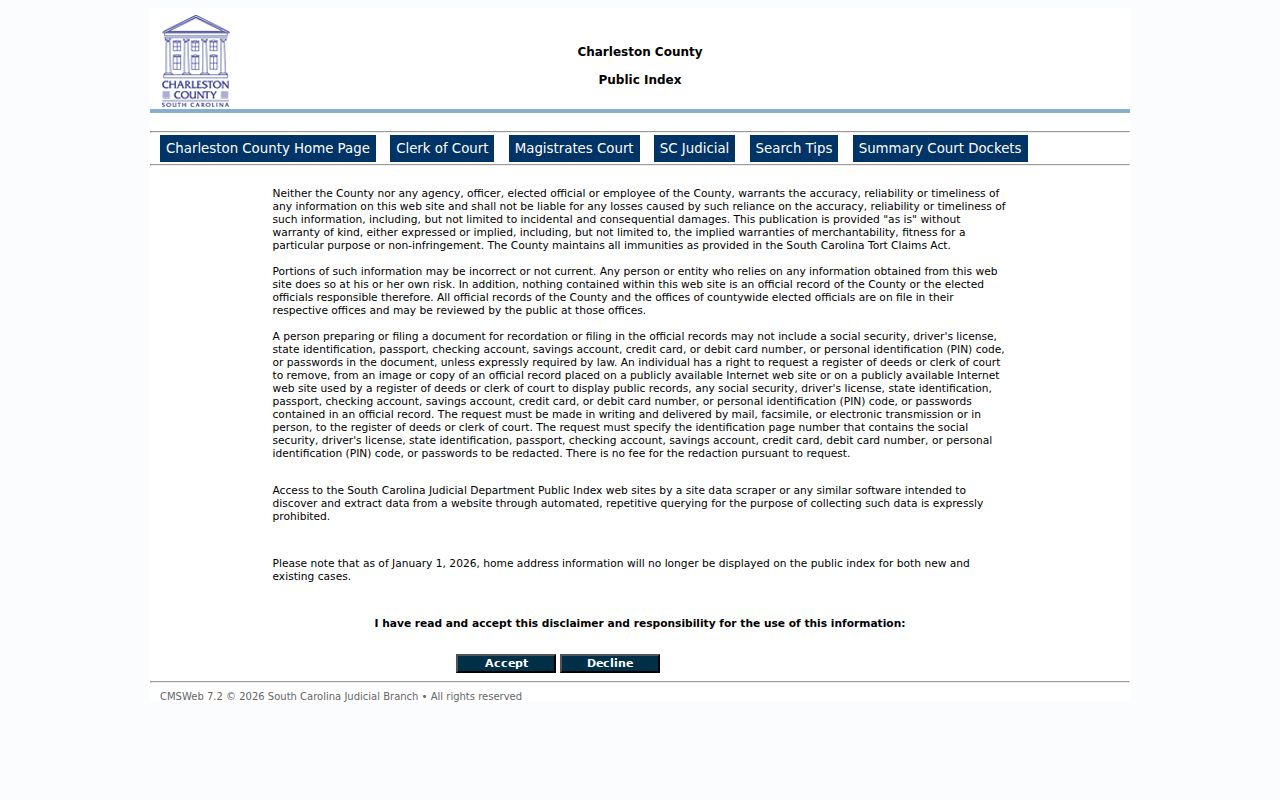
Open a case number to inspect its case information, then compare parties, actions, and dates with the clerk’s file path. The index warns that it may not be current or official. Home addresses stopped displaying for new and existing cases on January 1, 2026, and sealed or confidential material does not appear.
| Result element | What to compare |
|---|---|
| Case number and caption | The exact matter, not just a similar party name |
| Party entries | Name spelling and party role |
| Actions and dates | Whether the filing period fits the documented person |
| Judgments, tax map, and associated cases | Related record context, if available |
| Paper icon on Actions | A document image when the case and action provide one |
Most Common Pleas images are available from 1999 forward, but image availability is not guaranteed. The Clerk and courthouse remain the official-file and copy route. The Electronic Daybook is a separate lead for Judgment or Lis Pendens entries and does not replace the case file.
Charleston Resident Probate Evidence
Probate can clarify a family or estate question that an ordinary property result cannot. The County’s official Probate landing page routes visitors to estate, will, conservatorship, guardianship, and marriage-license searches. An estate file may identify the decedent, personal representative, heirs or devisees, case number, filing date, and creditor-notice process. A Charleston County deed of distribution for real property must be recorded with the Register of Deeds, making the court and deed record a useful pair for an inheritance step.
Charleston County Probate’s search landing page provides the official routing for estate and will research.
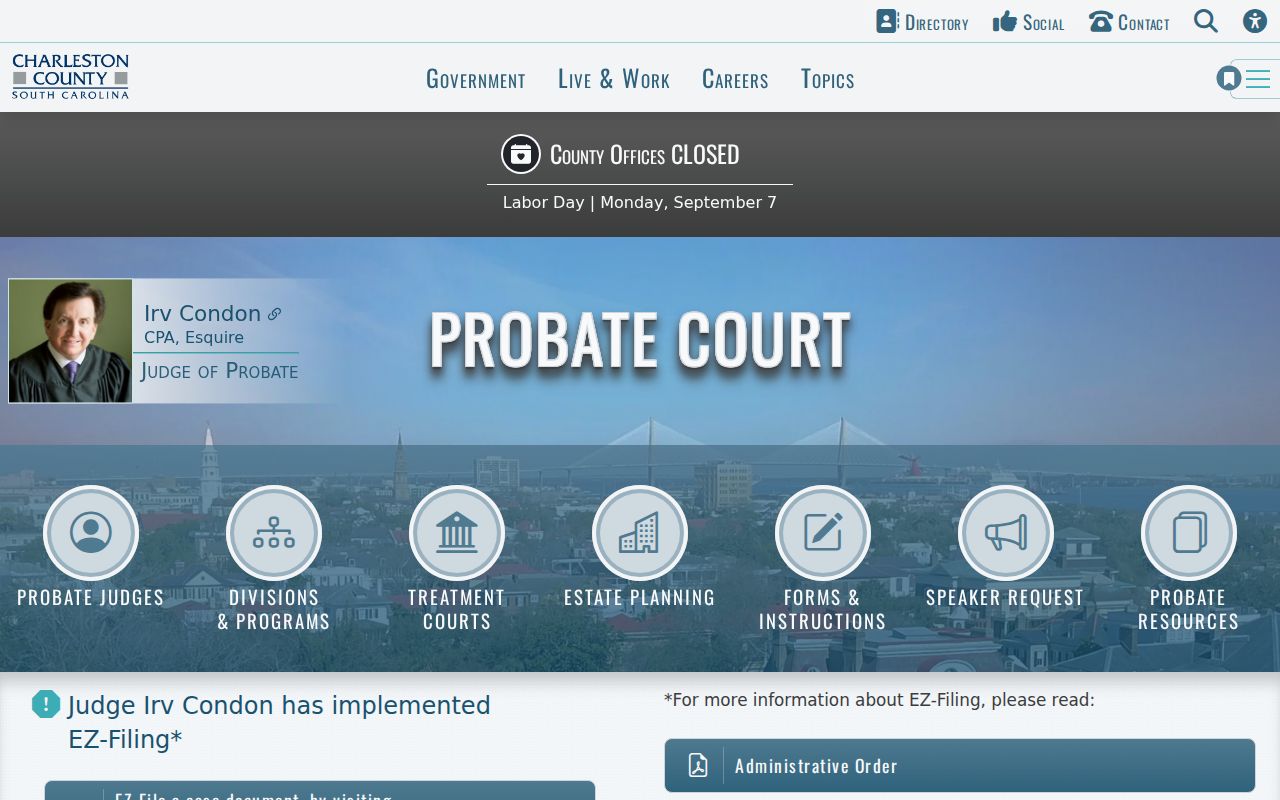
Search fields were not safely captured from the external service, so use the court’s current path rather than assuming a field or coverage date. For a copy request, include the known case name or number, document sought, ordinary or certified format, and approximate filing date. Probate’s Estate Division advises appointments to avoid an incomplete visit.
Note: An heir or representative named in an estate file documents that estate role, not a blanket claim about current family relationships.
Charleston Resident Vital-Record Rules
South Carolina DPH, rather than the City Records Center, issues state birth and death certificates and provides the state-held marriage and divorce routes. DPH birth and death records begin in 1915. An uncertified birth copy becomes available after 100 years, and an uncertified death copy after 50 years. Before those openings, certificates have relationship, legal-representative, or tangible-interest conditions. A vital record establishes an event. It does not establish a current address.
DPH’s birth-certificate page sets out request channels, identity requirements, and eligibility information for Charleston resident research.
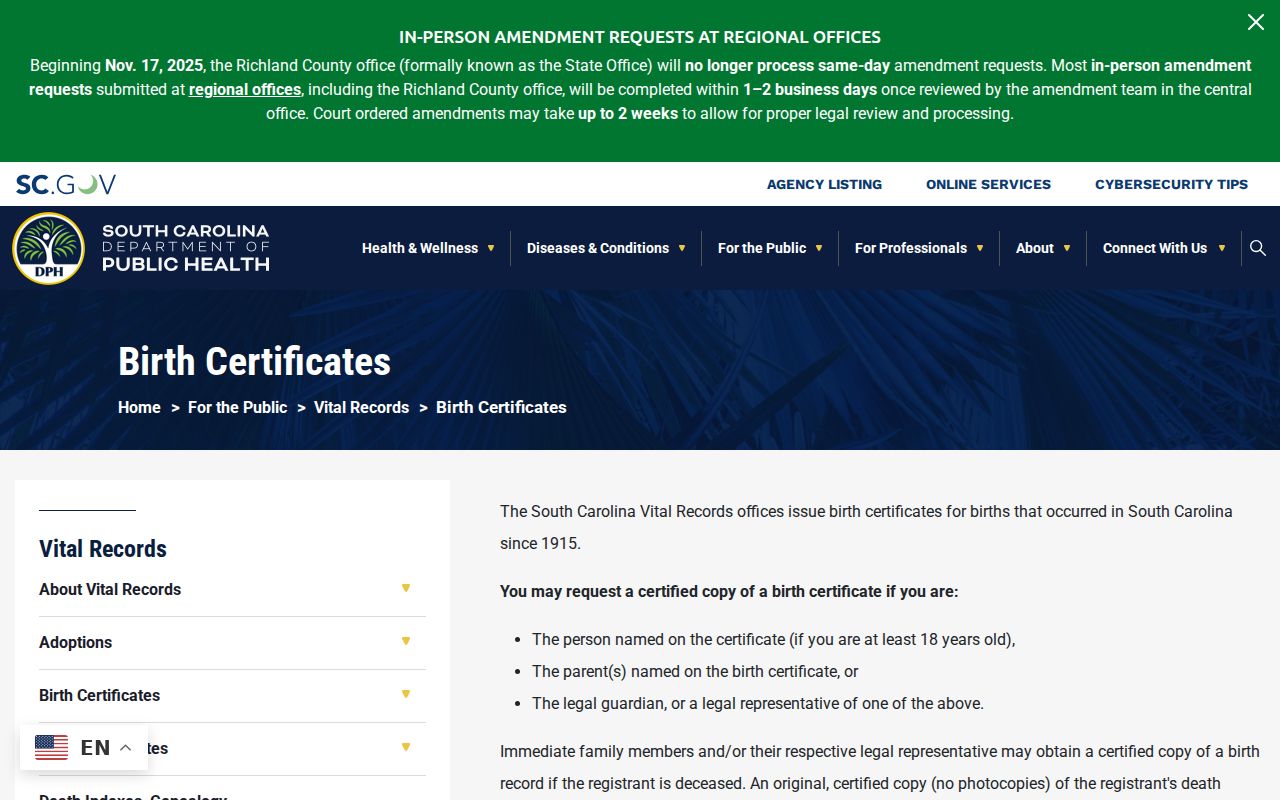
DPH states a $12 nonrefundable mail search fee that includes one certification if found, with $3 for each additional copy. Its mail average is four weeks. The cited expedited in-person charge is $17 plus $3 for an additional copy, while availability and vendor channels should be checked on the live record-specific page. Marriage certificates held by DPH cover July 1950 through December 2023; Charleston Probate handles earlier and later licenses. DPH divorce reports start in July 1962, but the decree comes from the Clerk of Court.
Charleston Resident Voter Access Limits
MyscVOTES is credentialed self-service. The current Check My Registration login asks for County, First Name, Last Name, Date of Birth, and the last four digits of a Social Security number. It helps a voter reach that voter’s registration, polling, sample-ballot, and voting-history tools. It is not an anonymous name search or a street-by-street Charleston resident lookup. A no-match may reflect a difference in name, date, county, or credentials.
South Carolina’s voter tools link to registration and voter-specific services without presenting a broad public resident roll.
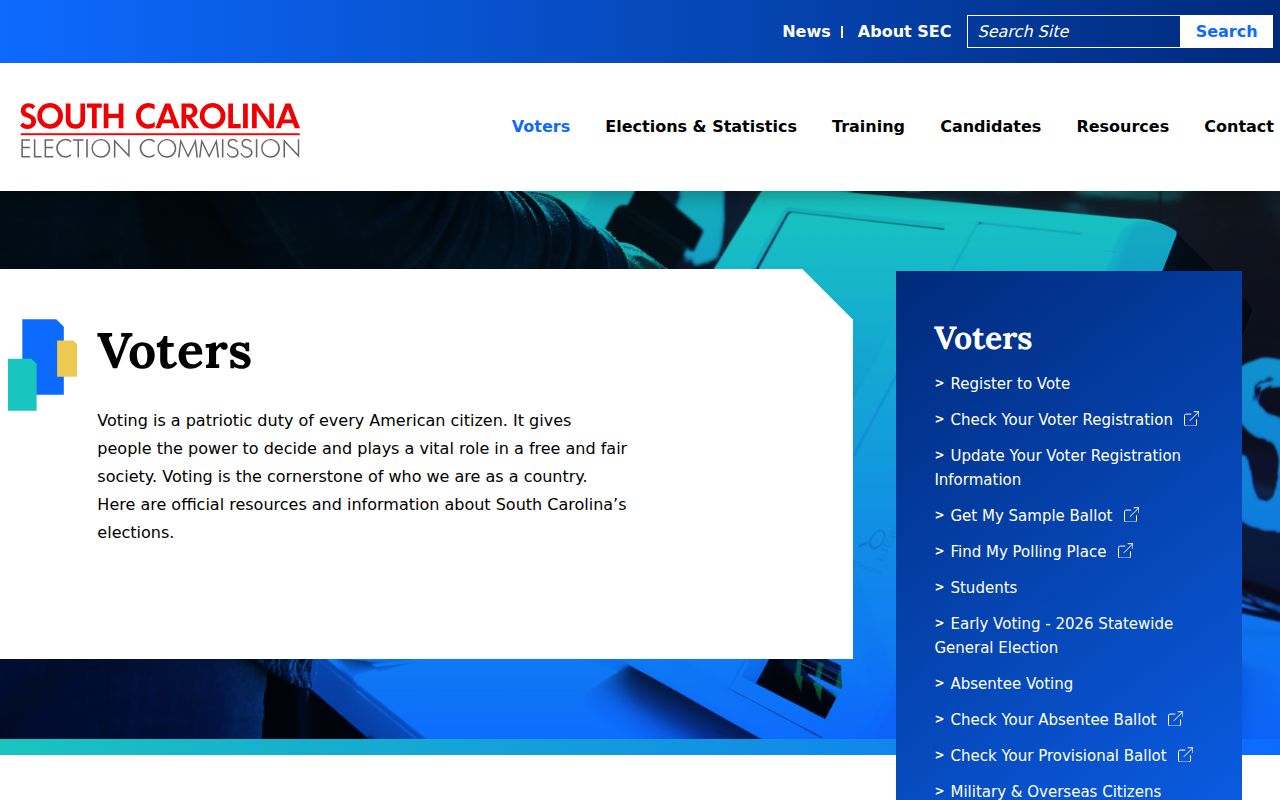
The State Election Commission sells defined voter-file lists only to registered South Carolina voters under S.C. Code § 7-3-20(D)(13). Those lists have separate criteria, fees, and legal limits. The law also restricts obtaining or using public records for commercial solicitation directed to a person in the state. Historical municipal voter ledgers at the Charleston Archive are archival sources, not proof of current eligibility or address.
Charleston Resident Registry Boundaries
Some official state tools serve a narrow statutory purpose and should stay within that purpose. The South Carolina Law Enforcement Division State Sex Offender Registry is a state registry, not a Charleston resident roster or a substitute for court verification. Use the official page and its stated terms when that specific public-safety record is relevant. Do not turn a result, an old address, or a name match into a claim about present residence.
SLED’s official registry landing page identifies the state route and its use notice.
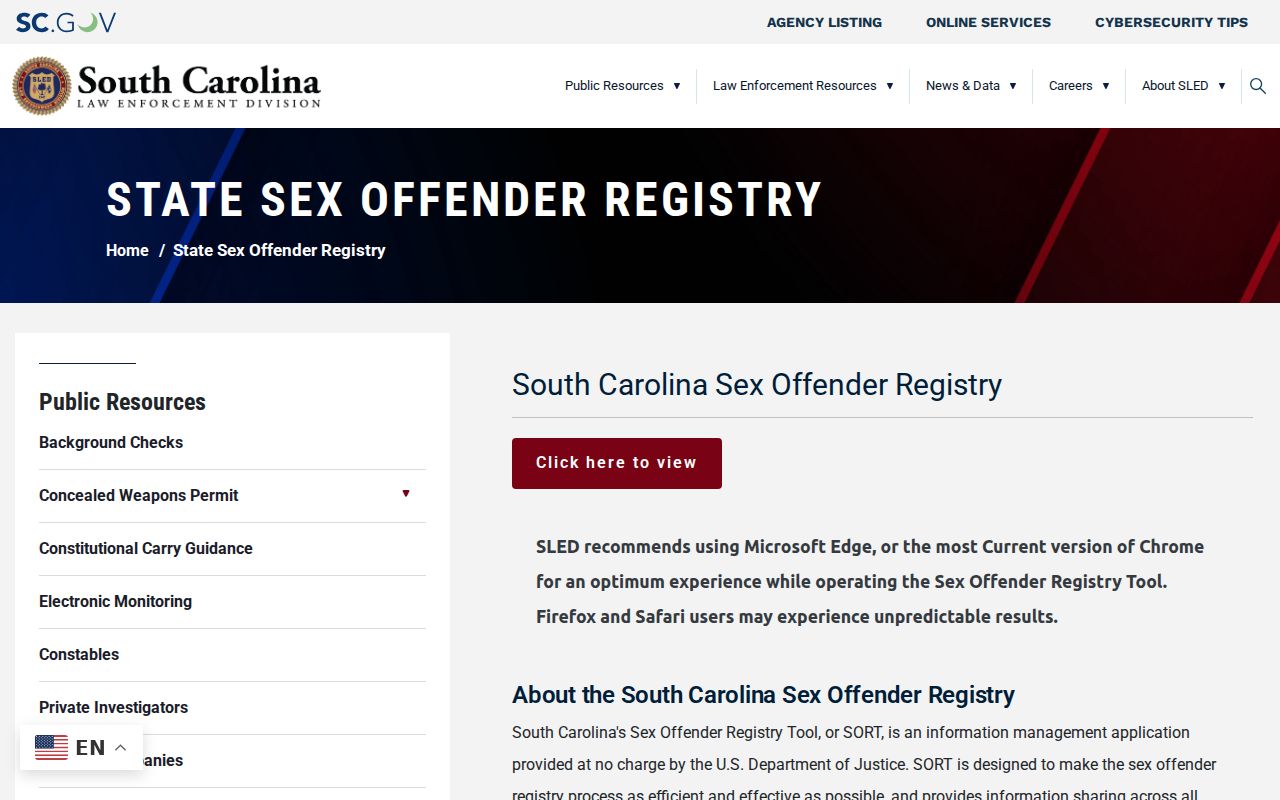
For a Charleston court matter, confirm the docket or official file with the Clerk rather than treating a separate state result as a full case history. The same care applies to any official name match: preserve the source, result date, and record reference before making a second-custodian comparison.
Charleston Resident Archive Leads
When the question is historical, the local archive route can be stronger than a current digital index. CCPL resources include city directories, historical voter ledgers, City death returns, Magnolia records, newspapers, yearbooks, census material, and historic-property resources. College of Charleston Special Collections, Avery Research Center, and the South Carolina Historical Society can help identify a dated school, community, manuscript, or newspaper source. A historic hit should be cited to its collection, item, and date.
CCPL’s South Carolina Room has appointment-based access during its Main Library renovation and temporary relocation. Check current CCPL South Carolina History access information or call before travel. For archival government material outside local holdings, the South Carolina Department of Archives and History offers a Research Room, catalog, and request routes.
A directory, yearbook, death return, or cemetery item may establish a person in a particular time and setting. It should not be carried forward as a present-contact finding. This is especially important in Charleston, where historical localities and street numbers may differ from current ones.
Charleston Resident Lookup Privacy Limits
Protected records are not gaps to work around. The South Carolina Address Confidentiality Program provides eligible participants with a designated address that government agencies and courts must accept. It does not erase records published before enrollment. Court material can be sealed, confidential, juvenile, adoption-related, or expunged. The Public Index no longer displays home addresses. DPH eligibility rules also remain in force even if a similar name appears in a property or directory record.
Lawful use. Use Charleston resident records for a personal, lawful purpose. South Carolina harassment and stalking laws prohibit conduct that intrudes on a person’s private life without legitimate purpose or causes fear or distress.
A person may ask the Register of Deeds or Clerk to remove specified sensitive identifiers from publicly available online court or ROD images through the documented written process. For a tax billing-address correction, voter update, permit correction, vital amendment, or record redaction, contact the custodian that holds the record. The South Carolina FOIA does not override vital, court, adoption, or confidentiality limits.
Note: A public index can be incomplete, delayed, or corrected, so preserve its reference and verify important results with the holding office.
Charleston Resident Records Requests
When an online path ends, direct the request to the office that holds the record. The South Carolina Freedom of Information Act, S.C. Code Ann. §§ 30-4-10 through 30-4-165, allows a person to inspect, copy, or receive nonexempt public records. Ask for an existing, identified record rather than a new analysis. City-held permits, code material, and meeting records use the City FOIA routing page; court records belong with the Clerk, Probate, or the court where filed.
The City policy describes an acknowledgement or availability decision within 10 business days for records under two years old and 20 business days for older records. Production follows within 30 calendar days after a required deposit, or 35 days for older records. Agencies may charge actual search, retrieval, redaction, and reproduction costs, and a 25 percent estimated-cost deposit may be required. State the preferred delivery format and request an itemized estimate if cost matters.
The counter, telephone, written request, archive, and library are all valid fallbacks. Court, vital, and archival requests each follow their own access rules. A focused request with a case number, book and page, parcel TMS, date range, or collection title is more useful than a broad request for information about a person.